
Published December 31, 2025
Austin rents may not rise significantly until 2027

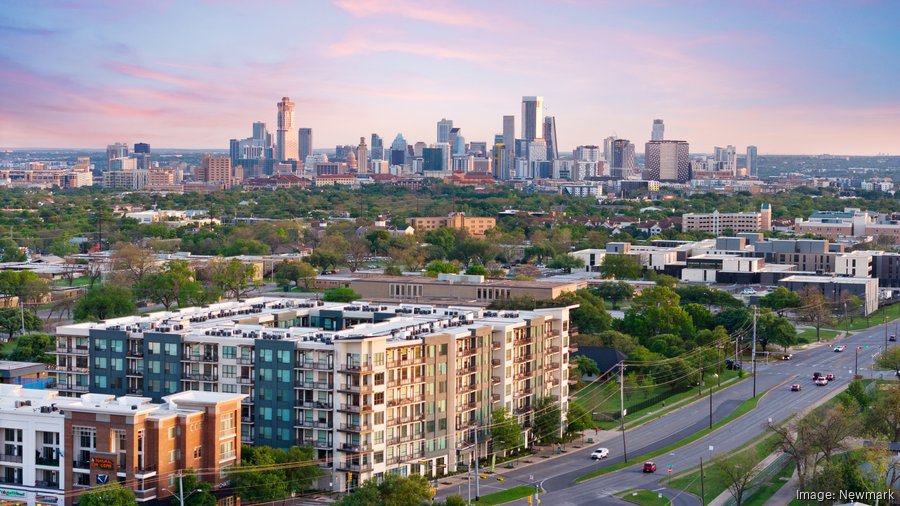
Over the next year, the Austin metro’s rental market should still be friendlier for tenants as the market continues to stabilize.
Austin’s rental market exploded during and after the pandemic as the metro area saw many businesses and people move to the area, which caused rents to spike, said Israel Linares, an analyst for CoStar. Rental construction since then has outpaced demand from Austin’s growing population. As a result, landlords have decreased their asking rents and offered more concessions.
“We've been going through this development phase the last few years. It hit a high point in 2024. We had over 32,000 units delivered,” said Linares. “And so that's created a lot of pressure on operators who are trying to lease up their spaces.”
CoStar estimates the average asking rent for the Austin metro in the first quarter of 2026 will be $1,525, which is about 4.7% lower than 2025 when the asking rent was $1,601.
Linares said CoStar has tracked that 65% of apartment complexes in Austin have offered some sort of concession in 2025 to find tenants.
Austin’s multifamily market had a vacancy rate of 10.2% in the third quarter of 2025. Year over year, effective rents have decreased 3.9%, according to a report from real estate firm Cushman and Wakefield.
But Linares has said the trend of supply outpacing demand in Austin could change over the next year as CoStar estimates that deliveries in 2026 will drop significantly. In 2026, CoStar estimates 4,600 units will be delivered, which would be a 74% decrease of the 17,500 units that were delivered in 2025 and a far cry from 2024 when just under 33,000 units were delivered.
Linares also said CoStar saw that 6,700 units broke ground in Austin this year, which is roughly the same number of units that broke ground in the area during the early 2010s.
The dropoff in expected deliveries can be attributed to the tough building environment in 2025 that had rising construction and labor costs, elevated interest rates and a high amount of new construction hitting the market, Linares said.
It may take until 2027 for the Austin market to see rent hikes, Linares said, because the number of people moving to Austin has slowed at the same time as deliveries and construction have slowed.
“It'll be a gradual process of rebalancing in this market and for market fundamentals to improve,” Linares said. “For context, in 2025, we're measuring around 19,000 units of absorption. For next year, we're expecting around 9,500 units, so a significant slowdown. But I think relative to Austin's historical average, it's actually still quite strong, and I think it reflects more of a normalization of conditions, rather than some kind of major downturn.”
Linares said that he’s still optimistic that Austin’s rental market can absorb the rental units on the market, and there will be demand for new projects in the years ahead as the area is still well-positioned long-term to keep adding jobs.
“Austin is forecasted to outperform most markets nationally, and so as we see better job growth here, that tends to drive people from other parts of the area looking for more promising employment opportunities, and I think that's what's really a notable driver for demand in Austin,” he said.
The Austin metro is expected to see strong population growth in the next few years. The Texas Demographic Center projects Austin’s population will reach 2.88 million by 2030 and hit 3.41 million by 2040, if the area sees middle-of-the-road population growth. The Texas Demographic Center estimated the Austin metro had 2.28 million residents in 2020.
Over the next year, Linares said he isn’t expecting the overall rental construction market to grow significantly unless market conditions sharply improve. But he said there should still be new starts in 2026 in areas of Austin that are seeing strong demand, which includes eastern Travis County and Southeast Austin.
"We're anticipating a reversion to positive growth in early 2027. Now that's a moving target, it just depends on how renters respond in 2026," Linares said.
Chris Anderson
Realtor | Southwest Austin & Hill Country Realtor | Chris Anderson, 12 Rivers Realty
or another way