Published September 4, 2024
Developers are embracing greater flexibility with industrial spaces in the Austin suburbs.

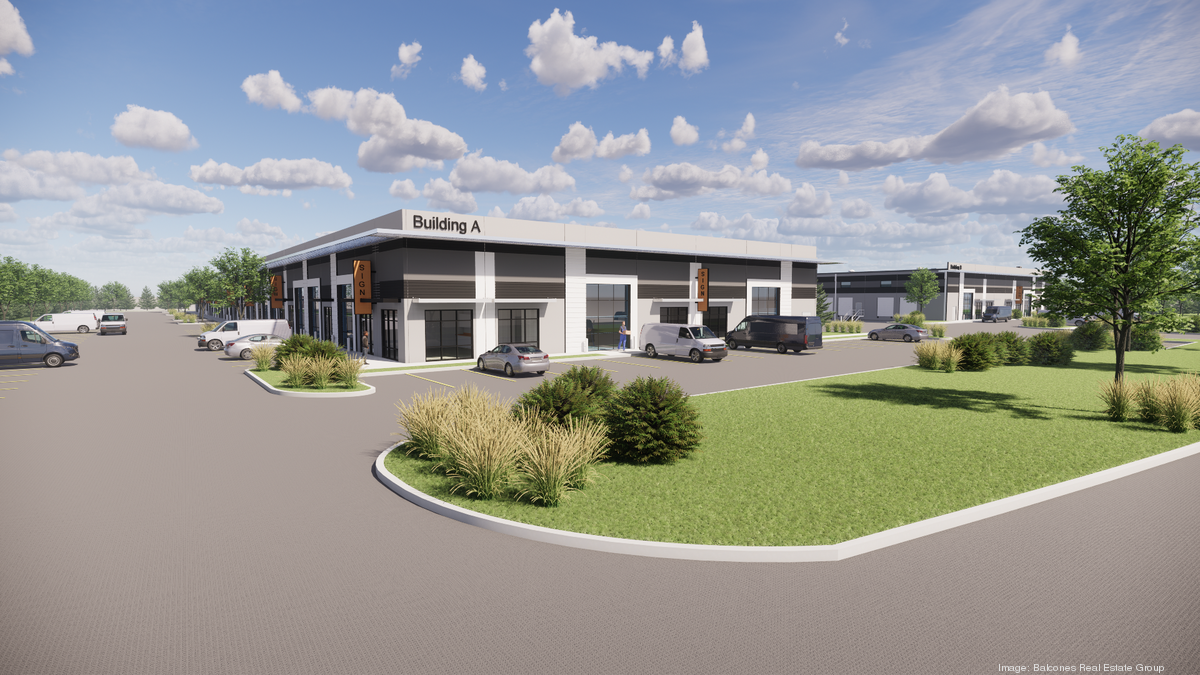
In mid-August, Brooke Harlander treaded through a construction site in Georgetown that is set to become Westinghouse Crossing. She then reminisced about when she first visited the 35-acre site more than two years ago when it was a sunflower field.
It was around that time Harlander moved to Austin to serve as the regional partner for Baltimore-based St. John Properties Inc. The half-century-old company was drawn here by Austin's population and industrial growth, which company leaders thought was a perfect fit for their flexible research-and-development product. The 225,000-square-foot Westinghouse Crossing project was the firm's first Austin-area project.
Now, a dozens of construction workers braved the summer heat to lay concrete for roads, wield tilt beams and assemble brick walls, she can't hide her excitement as the first two buildings are on track to deliver by the end of the year. She said they've received strong interest from life science and light industrial companies, but also from pickleball and day care operators.
"It'll be even more exciting when we have tenants to talk about," Harlander said.
St. John - which is also working on the 50-acre Leander Tech Park - is one of many companies working on projects that fall under the flexible industrial umbrella. St. John calls its product "flexible research-and-development," while others call it "shallow bay industrial" or "office condos" - emblematic of the flexibility of the product type.
But whatever you call it, it's becoming a hit in the Austin suburbs, where population and business growth is booming. Known projects underway or planned are in Georgetown, Hutto, Round Rock, Lockhart, San Marcos and more.
Developers who specialize in the product said it offers many advantages over the traditional industrial product. For one, it's flexible, meaning they can service a wider range of companies. Plus, what's in each space can be tailored to fit company needs based on size and use. The divisibility allows small businesses the opportunity of different ownership structures and growth opportunities.
"We can accommodate anything from one end of the spectrum and everything in between as well. There are fewer parameters of what we can do," Harlander said. "We're able to be flexible and make sure the way that we lease up is cohesive for all users so that they are happy and want to stay."
'Explosive growth'
Flexible industrial space is nothing new to Austin
There was roughly 22.5 million square feet of the product in the Austin area as of he second quarter, according to data from Houston-based Partners Real Estate. More than half of that was in the metro's core, such as the northwest and north central submarkets.
That's beginning to change. There was more than 500,000 square feet reported under construction in June, with nearly half of that in the Georgetown, Hutto and Taylor is precipitating the demand for flexible space. For example, a small service company such as an HVAC business can use the space instead of a fancy office downtown.
He also said there's been a huge gap in the marketplace for the product over the last decade, where most of the industrial build were focused on big, bulk warehouses. Plus, more modern, flexible industrial buildings have higher clear heights and things like a mezzanine or an upper-scale office component.
"This was an asset class that was significantly under built and outdated. So you're starting to see more modern specs to fit modern companies," Kasten said.
However, there are several challenges to building this type of product. Developers said the project can be more costly because of the of the high number of tenant improvements and constant changeover. Flexible industrial space also requires a lot more hands-on asset management than a single-tenant user. Plus, there are actual challenges to development, like fitting the product into development codes that make it hard to best utilize the property.
"I bet a lot of the developers out there will talk themselves into bigger buildings," Ken Mongold, partner of Georgetown-based Headwater Commercial Realty LLC, said. "I think we'll need bigger buildings, a few of them, but were going to need more smaller buildings."
Flexible industrial space is also useful in the economic development realm. While many companies that work alongside Tesla Inc. or Samsung Electronic Co. Ltd. need large spaces, others might be on the hunt for smaller, more flexible options.
That's the case in Hutto, according to Hutto Economic Development Directory Cheney Gamboa. She said the city, which is near the new Samsung factory, gets many requests from companies that are looking for a mixture of industrial, office and warehouse components. Plus, they need space to service home-based businesses and entrepreneurs that are in the early stages of their growth. Flexible industrial space is a good option for that.
"Anytime that you can offer a wide variety pf product, the more attractive you are to business in general, so you fit more of their needs," Gamboa said.